CEOS Analytics Lab: Harmonizing Multisource Earth Observation Analysis at Scale
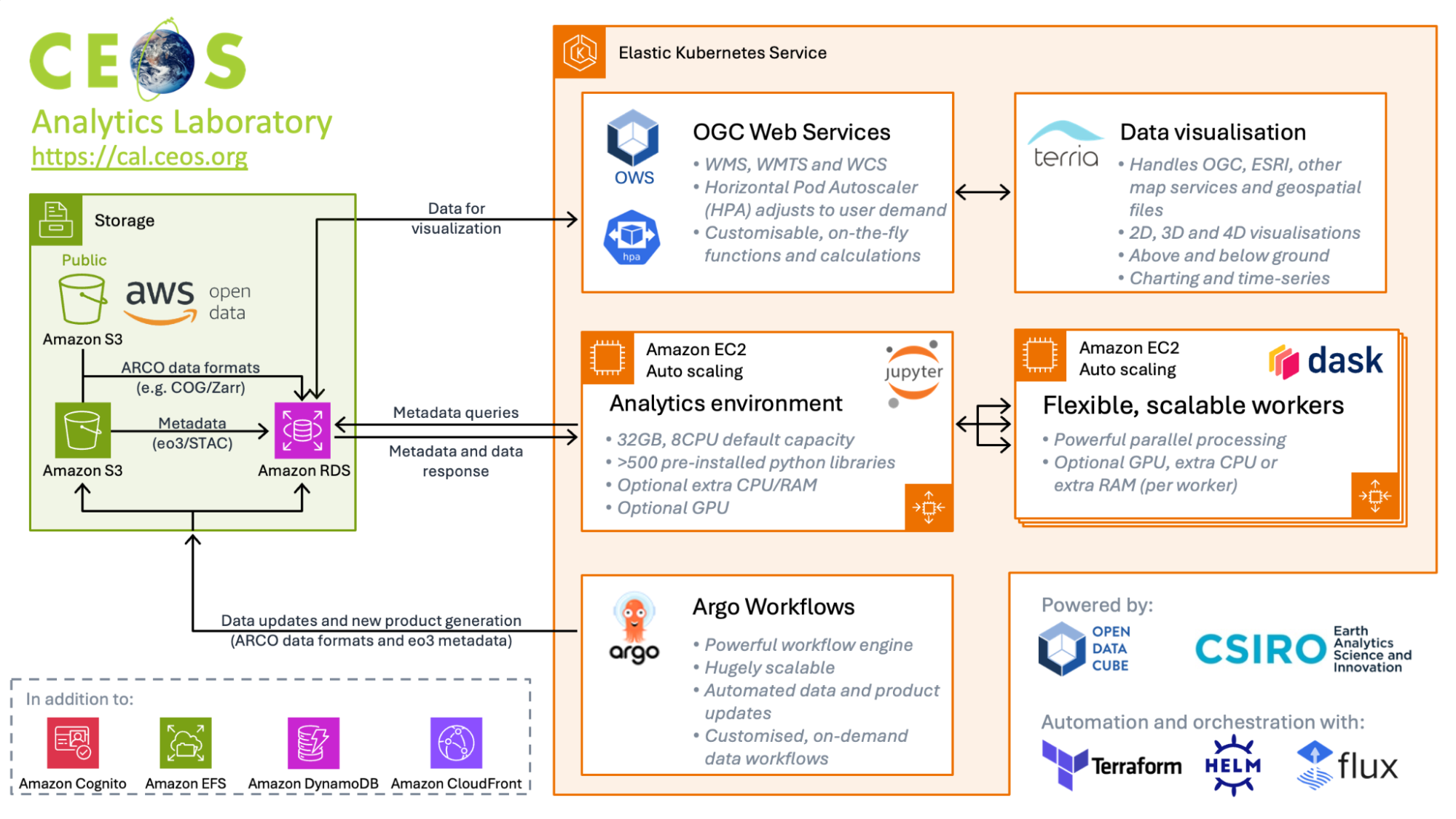
The CEOS Analytics Lab (CAL) is a cloud-based platform developed through a collaboration between the CEOS Systems Engineering Office (SEO), CSIRO, and the Universidad Adolfo Ibáñez’s Centre for Earth and Space. The platform’s goal is to address the growing challenges of processing increasingly large and complex Earth observation datasets by offering a collaborative, scalable environment for data analysis for use by the CEOS community. CAL leverages and implements CEOS’ own Analysis Ready Data standards and takes advantage of scalable cloud computing and Cloud Native Geospatial data solutions.
To support CEOS projects and activities, CAL provides personal pre-configured JupyterLab environments that include hundreds of essential data science, machine learning, and geospatial Python libraries, built on Amazon Web Services and CSIRO’s Earth Analytics Science & Innovation (EASI) platform. The platform integrates Open Data Cube for simplified data access and Dask Gateway for scaling analyses across multiple servers, allowing users to process large geographical areas efficiently without managing complex infrastructure. CAL is designed to support a data-centric approach to CEOS internal activities, aligning with the emergence of cloud-native geospatial solutions.
The CEOS community has already started adopting this resource. The Coastal Observations, Applications, Services, and Tools Virtual Constellation (COAST-VC) used CAL to support analysis of coastal data for the Chesapeake Bay Pilot study, addressing challenges related to flooding, water quality, ecosystem health, and shoreline change as referenced in Assessment of Changes of Complex Shoreline from Medium-Resolution Satellite Imagery (2023, Nezlin, et.al.). Similarly, the CEOS Ecosystem Extent Task Team leveraged the platform to develop ecosystem classification demonstrators using machine learning algorithms in the Hudson Bay Lowlands, Canada.
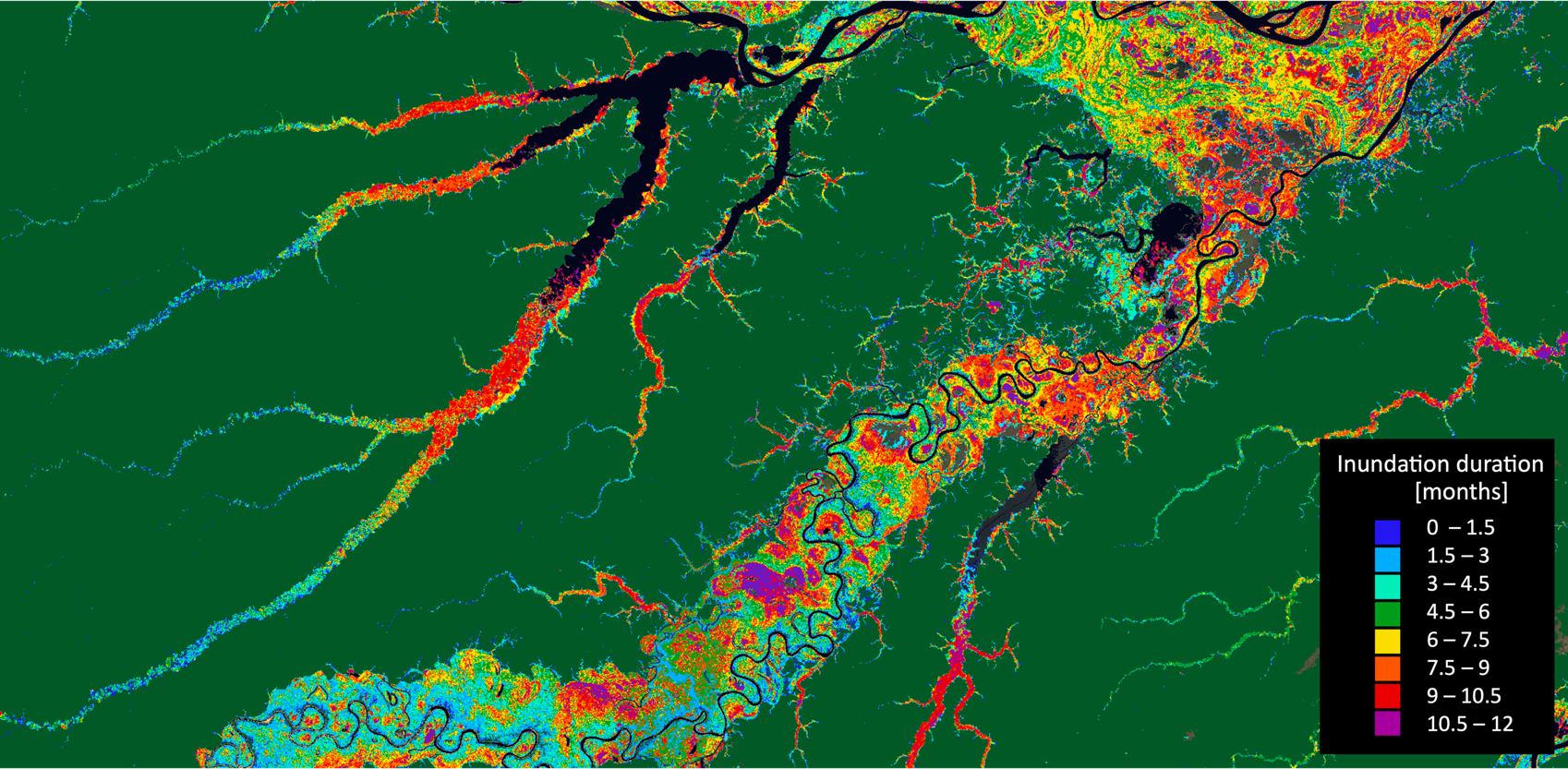
The ALOS-2 Forested Wetlands Inundation Mapping project is aimed at classifying ALOS-2 PALSAR-2 time-series data to characterise wetland inundation extent and changes across globally significant tropical wetlands in support of the Ramsar Convention on Wetlands and LSI-VC. As the original local processing workflow was time-consuming and data intensive, the CAL cloud-based environment was used to scale and optimise the workflow. The cloud-based approach increased processing efficiency by about 80 times – with the processing time for the 10-year time series reduced from some 800 hours on a local work station to less than 10 hours on the CAL.
Another example of CEOS community use of CAL is with the Working Group on Cal/Val SAR Subgroup and SARCalNet. A new custom CAL environment has been created which includes a range of SAR tools and libraries for processing and analysis of SAR data, in particular over the reference sites provided by SARCalNet. The SAR community is provided with a valuable resource for target curation and calibration and validation exercises, including sensor cross-calibration and inter-comparison of tools.
CAL is available for use by CEOS Agencies, Working Groups and Virtual Constellations to support CEOS-related projects and enable technical collaboration. If any of the above examples have inspired an idea for a new CEOS project, or you can see a use for CAL for existing CEOS projects or activities, please request an account or contact the team for support.